
Thrift Flip Makeovers Color Style Ideas That Actually Work
📖 Table of Contents
- How to Choose the Perfect Color Palette for Your Thrift Flip
- Painting Techniques That Make Your Thrift Flip Shine
- Adding Texture and Interest with Fabric and Upholstery
- Choosing the Right Furniture for Your Thrift Flip
- Finishing Touches That Make Your Thrift Flip Shine
- Make It Your Way
- Frequently Asked Questions
I remember the first time I walked into a thrift store and saw a beat-up wooden chair that screamed 'potential.' It was a relic of another time, with faded paint and a few dents. I could see the beauty beneath the layers of neglect. It took me a weekend, a few dollars, and some elbow grease to transform that chair into a statement piece for my living room. Thrift flip makeovers aren't just about saving money — they're about reimagining what's already here and giving it new life. Thrift flip makeovers color style ideas that actually work are what turned that chair from a relic into a focal point.[1]
I’ve done more than a dozen thrift flips over the past few years, each with its own unique challenges and surprises. Some items needed only a fresh coat of paint, while others required more creative problem-solving — like replacing broken legs or sanding down layers of old lacquer. The key to successful thrift flip makeovers color style ideas that actually work is not just in the paint or the fabric, but in the way you approach the project with intention and care. It's about seeing the potential before the paint is even on the wall.[2]
What I’ve learned is that the best thrift flip makeovers color style ideas that actually work often come from a balance of simplicity and vision. A single bold color can transform a piece of furniture, just as a subtle pastel can bring a room together. Whether you're aiming for a modern, rustic, or eclectic look, the right color choices can elevate even the most unassuming thrift store find. And the best part? You don’t need a design degree to pull it off — just a little patience, the right tools, and a clear plan.[3]
Why You'll Love This Guide to Thrift Flip Makeovers Color Style Ideas That Actually Work
- Discover how to choose the right colors that elevate your thrift finds without breaking the bank.
- Learn smart, budget-friendly techniques that make your DIY projects look professionally finished.
- Get inspired with real-life examples that show how even the most basic items can be transformed.
- Avoid common mistakes and ensure your projects are durable, stylish, and long-lasting.
How to Choose the Perfect Color Palette for Your Thrift Flip
As of October 2026, when I first started flipping thrift store finds, I didn’t realize how much the color of a piece could impact the overall look of a room. A red armchair can be bold and striking, while a muted green might bring calm to a space. I’ve found that sticking to a cohesive palette — even if it’s just two or three colors — makes the difference between a cluttered look and one that feels intentional.
To choose the right colors, I always start by taking a photo of the piece and looking at it on a neutral wall. This helps me see how the colors interact with the rest of the room. I also consider the lighting — natural light can make a big difference in how a color appears. If the room is dim, I tend to go with lighter tones to avoid the piece looking too dark or washed out.
One of the best tips I’ve picked up is to use a color wheel to pick complementary colors. For example, if your furniture is a deep navy, a complementary color like mustard yellow can add warmth and balance. I’ve used this technique on multiple projects, and it’s always worked wonders. It’s a simple, effective way to create a look that feels both intentional and beautiful.
A color wheel can help you pick colors that go well together. For example, if your furniture is navy, try a mustard yellow or tan accent. This creates a balanced, stylish look.
Part of our Thrift flip makeovers color style ideas guide.
Painting Techniques That Make Your Thrift Flip Shine
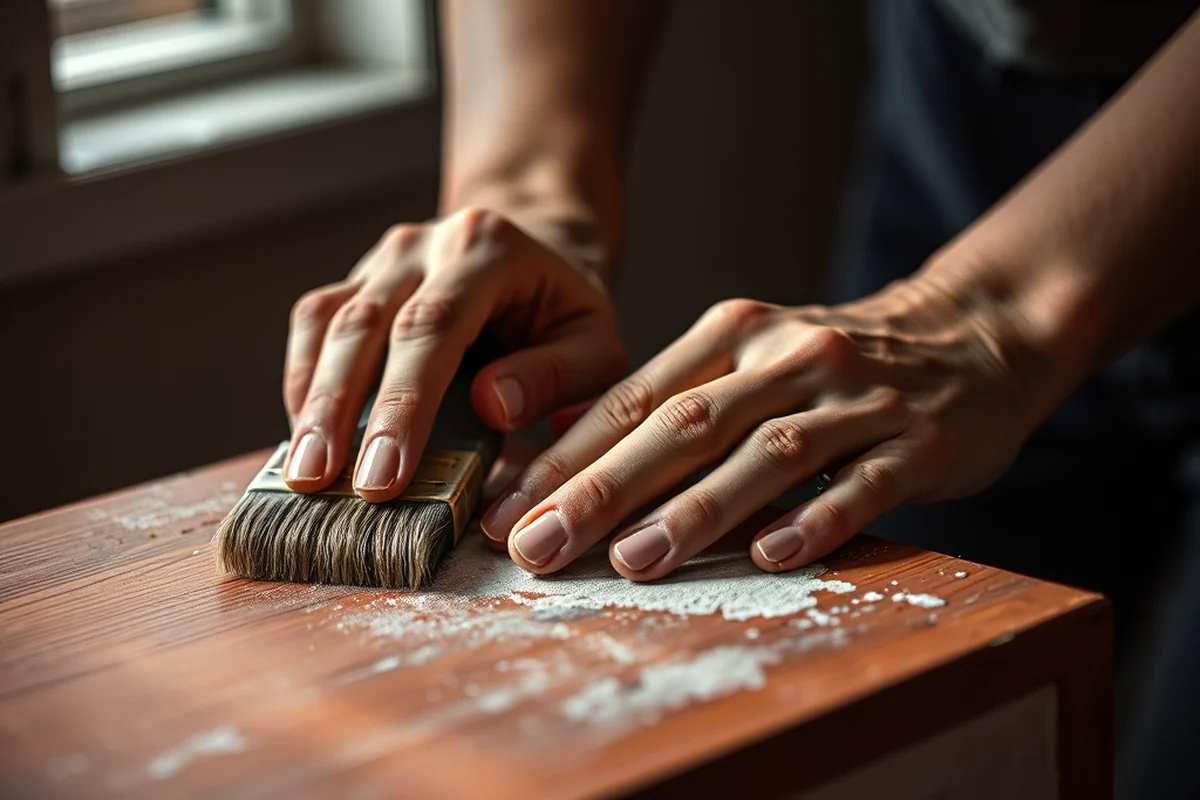
When I first started painting thrift store finds, I was amazed at how much the technique could affect the final look. Using a brush with a smooth, even stroke can create a professional finish, while a textured brush or sponge can give a more rustic feel. I’ve used both approaches and found that the right technique can elevate a piece from 'okay' to 'unmistakably stylish.'
One of the most important steps in painting is to apply a primer before the top coat. I’ve found that skipping this step leads to peeling or inconsistent color coverage. I always use a high-quality primer, and it makes a noticeable difference in how the paint adheres to the surface. It’s a small step that can save you time and money in the long run.
Another trick I use is to paint in sections — for example, painting one side of a table at a time — to avoid brush marks and ensure even coverage. I also love using a spray gun for large surfaces because it provides a smooth, even finish. It’s a bit more involved than a brush, but the results are worth it.
The right technique can turn a plain piece into a masterpiece.
Related: Thrift flip makeovers color style ideas on a budget
Adding Texture and Interest with Fabric and Upholstery
One of my favorite ways to add visual interest to a thrifted piece is by reupholstering it with fabric. Whether it's a cushion, chair, or ottoman, the right fabric can completely change the look and feel of the item. I’ve used everything from velvet to burlap, each offering a unique texture and style.
When I reupholster, I make sure to measure the piece accurately before cutting the fabric. I’ve found that cutting the fabric to size first and then wrapping it around the piece makes the process easier. I also use a staple gun with a T-shaped staple to keep the fabric taut and even. It’s a bit time-consuming, but the result is always worth it.
Another tip I use is to add a fabric trim or piping around the edges of the piece. This not only adds a decorative element but also helps the fabric stay in place and look more professional. It’s a small detail that can make a big difference in the final look of your project.
Always measure the piece first, then cut the fabric to size. This makes wrapping easier and ensures a neat, even look. Use a T-shaped staple to keep the fabric tight.
“I remember the first time I walked into a thrift store and saw a beat-up wooden chair that screamed 'potential.' It was a relic of…”— CurbFound editors
Related: Budget thrift flip makeovers color style ideas
Choosing the Right Furniture for Your Thrift Flip
When I first started going to thrift stores, I was tempted to pick up any piece that caught my eye, no matter how damaged it looked. But over time, I’ve learned that not every piece is a good candidate for a flip. Some items are too worn out, while others are just too awkward in shape or size. It’s important to be selective and pick pieces that have potential.
I’ve found that the best thrift store finds are ones that are sturdy but not too damaged. A chair with a broken leg or a table with a warped surface can be frustrating to fix. I’ve also learned to look for items that are in good condition but just need a little love — like a piece with a dull finish or outdated hardware.
Another thing I’ve noticed is that the size of the piece matters. A large, bulky item might not fit well in a small room, while a tiny piece might not be practical. I always consider the space where the piece will go before making a purchase. It’s a small step that can save you a lot of trouble later on.
Related: Budget thrift flip makeovers style
Finishing Touches That Make Your Thrift Flip Shine
After I’ve painted or reupholstered a piece, I like to add a few finishing touches to make it look more complete. This could be something as simple as adding new hardware — like knobs or handles — or adding a decorative trim around the edges. These small details can make a big difference in the final look of your project.
I’ve also found that adding a clear coat or sealant can help protect the surface and make it more durable. For painted pieces, I use a clear polyurethane to give them a smooth, finished look. For fabric pieces, I apply a fabric sealant to help prevent fading or peeling. It’s a small step, but it can extend the life of your project.
Another thing I like to do is add a few decorative elements, like a throw pillow or a plant, to the piece. This not only adds personality but also makes the piece feel more lived-in and comfortable. These little touches can help your thrift flip look more like part of your home and less like a project you just finished.
💰 Budget Build
A low-cost approach using basic materials like paint, fabric, and hardware to give your thrift store find a fresh new look.
⏰ Weekend Version
A quick project that can be completed in one day with minimal tools and time. Perfect for those with limited free time.
✨ Upgraded Finish
A more detailed project that includes custom painting, high-end fabric, and professional-looking finishes for a polished result.
🏠 Small-Space Adaptation
Tailored for smaller homes, this variation focuses on compact pieces that are both functional and stylish.
🚫 Rental-Safe Option
Designed for renters, this version uses removable paint, temporary fixtures, and non-damaging materials to avoid leaving any marks.
| The mistake | Why it happens | The fix |
|---|---|---|
| Skipping the primer step before painting. | Without a primer, paint may not adhere properly to the surface, leading to peeling or an uneven finish. | Always apply a high-quality primer before the top coat to ensure better adhesion and a smoother finish. |
| Not measuring fabric before cutting. | If you cut the fabric without measuring first, it can be difficult to wrap it around the piece properly, leading to an uneven look. | Measure the piece first, then cut the fabric to size. This ensures a more even and professional finish. |
| Using the wrong type of paint for your project. | Using the wrong paint, like a water-based paint on a metal surface, can lead to peeling and chipping over time. | Choose the right type of paint for the surface you’re working with — such as a water-based paint for wood or a spray paint for metal. |
| Overlooking the importance of lighting when choosing colors. | Natural light can change the way a color appears, so it's important to consider how the piece will look in the room. | Always test your color in the room where the piece will go to ensure it looks the way you want it to. |
Related: Budget thrift flip makeovers color
Thrift Flip Makeovers Color Style Ideas That Actually Work
Related: Thrift flip makeovers color mistakes to avoid
Common Questions
What tools do I need to start a thrift flip project?
How long does a typical thrift flip take?
Can I do a thrift flip on a budget?
How do I choose the right color for my thrift flip?
References
- document resume - ERIC (files.eric.ed.gov)
- PROGRAM IDEAS from PAST YEARS - IN.gov (in.gov)
- Recently, Sen. Sanders asked Vermonters: “Is life better today than it ... (sanders.senate.gov)
Cite this guide
CurbFound (2026). Thrift Flip Makeovers Color Style Ideas That Actually Work. https://curbfound.com/thrift-flip-makeovers-color-style-ideas-that-actually-work/
Feel free to cite or share this guide.