Thrift Flip Makeovers Color Style Ideas For Small Spaces
📖 Table of Contents
The first time I walked into a thrift store and found a perfectly intact mid-century side table, I knew I had stumbled onto something special. It wasn't just the price—$25 for a piece that could easily have cost hundreds in a furniture store—that caught my attention. It was the potential. That table, with its clean lines and sturdy wood, was screaming for a fresh coat of paint, new hardware, and a thoughtful placement in my tiny apartment. That's when I realized that thrift flip makeovers aren't just about saving money—they're about transforming small spaces into something uniquely yours. And with color style ideas for small spaces, the right palette can make all the difference.[1]
I live in a 500-square-foot apartment, and every square inch counts. That’s why I’ve learned to be strategic with color—using it to make rooms feel larger, more open, and more inviting. A few years ago, I painted my living room walls a bold forest green, and it worked so well that I’ve never looked back. The color added depth without making the space feel cramped. It was a reminder that thrift flip makeovers color style ideas for small spaces don’t have to be muted or cautious. In fact, they can be a powerful tool for creating a space that feels both cozy and expansive.[2]
One of the most satisfying parts of thrift flipping is the transformation that happens when you pair the right piece with the right color. I’ve turned a faded, stained bookshelf into a focal point in my office by painting it a soft sage green. I’ve brightened up a narrow hallway by using a pop of coral on an outdated mirror. These aren’t just decorative choices—they’re functional. They help guide the eye, create zones within a small space, and make the room feel more intentional. Thrift flip makeovers color style ideas for small spaces are about more than aesthetics; they’re about creating a space that feels like home.[3]
Why You'll Love This Color-Centric Thrift Flip Makeover Approach
- Transform underutilized furniture into statement pieces with minimal cost and effort.
- Use color to create depth, guide the eye, and make small spaces feel more expansive.
- Leverage affordable, high-quality materials to achieve professional-looking results.
- Personalize your space with unique color combinations that reflect your style.
Choosing the Right Color Palette for Small Spaces
As of October 2026, when working with small spaces, it's essential to choose colors that enhance the illusion of space. Light, neutral tones like soft grays, warm whites, and pale beiges are excellent choices because they reflect light and make rooms feel more open. I once painted my dining area a pale lavender, and it instantly brightened the entire space without overwhelming it.[4]
On the other hand, bold colors can be used strategically to create visual interest and add personality. I've used deep navy on a thrifted armchair and it became the focal point of the room. It's important to balance bold colors with lighter ones to avoid making the space feel cramped.
A practical tip I've learned is to use color in layers. For example, a light wall color paired with a medium-toned rug and a bold piece of furniture can create a dynamic and well-balanced look without overcomplicating the space.
Before painting, use a paint stripper to remove old paint from thrifted furniture. This ensures a smooth, even finish and reduces the need for multiple coats.
Part of our Thrift flip makeovers color style ideas guide.
Maximizing Light with Color and Reflective Surfaces
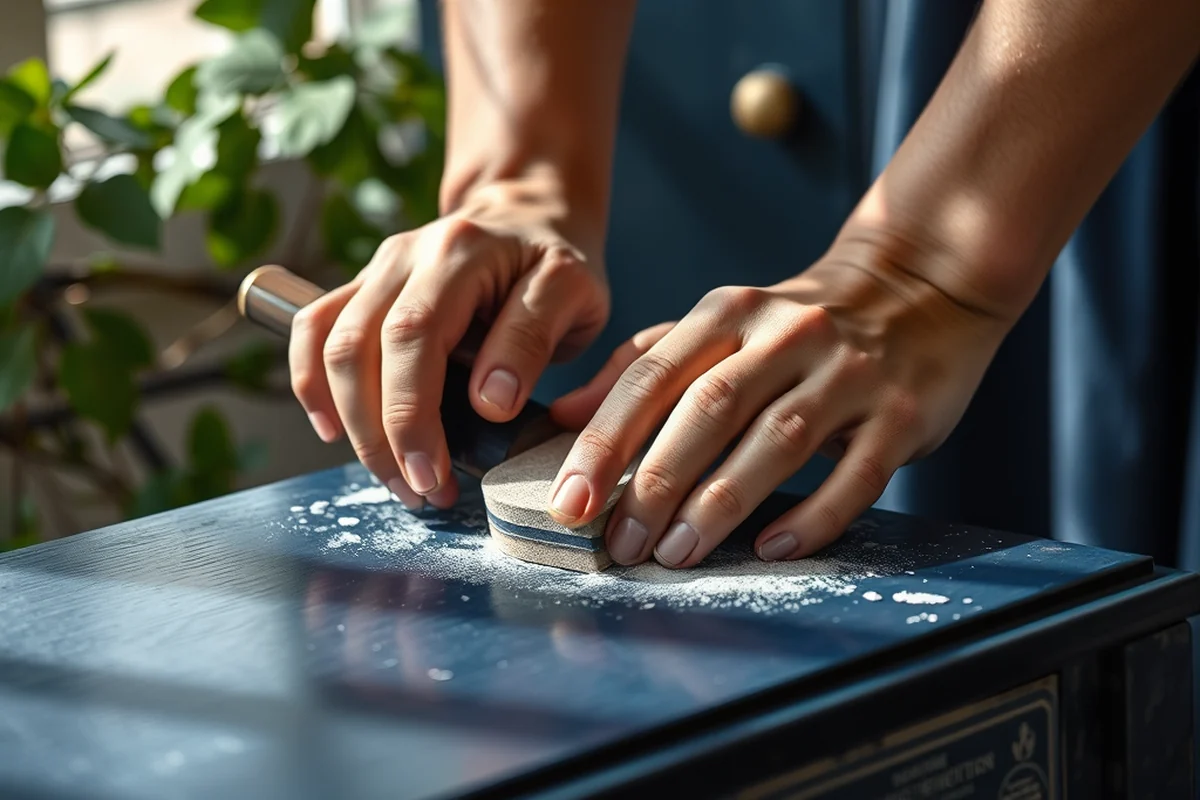
Light is one of the most powerful tools in a small space. I've found that using reflective surfaces like glass, mirrors, and glossy finishes can make a room feel significantly larger. For example, I painted a small closet door a glossy white and placed a small mirror on the back wall—it transformed the space into a much more functional and airy area.
Color also plays a role in how light interacts with a room. Lighter colors reflect more light, which makes a room feel brighter and more expansive. I once painted my kitchen cabinets a soft beige, and the effect was immediate—more light seemed to bounce around the room, making it feel more open and welcoming.
Another trick I've used is to incorporate light-colored flooring. Light wood or pale tile can make a room feel more spacious. I've noticed that in my apartment, the areas with lighter flooring seem to be more inviting and less claustrophobic than those with darker materials.
Light is your best friend in a small space—use it wisely.
Related: Thrift flip makeovers style tips
Adding Depth with Accent Colors and Textures
Adding depth to a small space can be achieved with the right use of accent colors and textures. I've found that using a bold accent color on a single piece of furniture, like a chair or a cabinet, can draw the eye and add personality without making the room feel cluttered.
Textures are also important for creating dimension. I've used a mix of materials—like a wicker basket next to a sleek, modern chair—to add visual interest and make the room feel more dynamic. This approach helps break up the monotony of a small space and adds a sense of depth.
A practical tip I've learned is to use accent colors sparingly. A small area rug in a bold hue or a piece of art with a contrasting color can make a big impact without overwhelming the space. This is especially effective in rooms with a lot of natural light.
When applying accent paint, use a sponge for a soft, textured look. This is a great way to add depth to a piece without using a brush or roller.
“The first time I walked into a thrift store and found a perfectly intact mid-century side table, I knew I had stumbled onto something special.”— CurbFound editors
Related: Quick thrift flip makeovers color style ideas
Creating Zones with Color and Furniture Arrangement
In a small space, defining zones can be a game-changer. I've used color to create visual boundaries between different areas of a room, like a living area and a home office. For example, I painted the back wall of my living room a soft blue, which helped separate the space from my home office while still keeping the overall look cohesive.
Furniture arrangement also plays a role in creating zones. By placing a piece of furniture, like a low ottoman or a bookshelf, between two areas, you can create a natural division. This is especially effective when combined with a change in color or texture.
Another trick I've used is to incorporate different floor textures in separate zones. For instance, using a woven rug in the living area and a smooth tile in the kitchen helps distinguish the two spaces without the need for walls or partitions.
Related: Thrift flip makeovers color style ideas examples
Using Color to Create a Focal Point
A focal point can make a small space feel more intentional and visually balanced. I've used a bold color on a thrifted side table or a piece of art to draw the eye and anchor the room. This helps guide the eye around the space and creates a sense of direction.
Another way to create a focal point is by using a pattern or a unique texture. I once used a piece of vintage fabric with a bold geometric pattern on a thrifted bench, and it became the centerpiece of the room. It added a sense of character and made the space feel more curated.
When choosing a focal point, it's important to balance it with the rest of the room. A bold piece should be complemented with lighter colors and simpler shapes to avoid overwhelming the space. This is especially important in small rooms where every element is visible.
💰 Budget Build
A no-frills approach with minimal cost, using affordable paints and thrifted pieces.
⏰ Weekend Version
A quick and simple project to complete in one or two days with minimal effort.
✨ Upgraded Finish
Add a professional touch with quality materials and detailed finishing techniques.
🏠 Small-Space Adaptation
Tailored for compact rooms, using color and furniture placement to maximize space.
🛡️ Rental-Safe Option
Use removable and temporary materials that won’t damage the original structure of the space.
| The mistake | Why it happens | The fix |
|---|---|---|
| Using too many bold colors in a small space | Too many bold colors can make a small space feel overwhelming and chaotic. | Limit bold colors to one or two pieces and balance them with neutral tones. |
| Not preparing the surface properly | Skipping steps like sanding or using a paint stripper can lead to an uneven or patchy finish. | Always prepare the surface by sanding and cleaning it before applying paint. |
| Overusing textures | Too many textures can make a small space feel cluttered and visually busy. | Use a mix of textures but keep it simple and intentional to avoid overwhelming the space. |
| Not considering lighting | Failing to consider how light interacts with color can lead to unexpected results, like overly bright or dim spaces. | Test colors in the space at different times of day and adjust as needed. |
Related: Thrift flip makeovers color style ideas guide
Thrift Flip Makeovers Color Style Ideas For Small Spaces
Related: Quick thrift flip makeovers color
Common Questions
How can I make a small space feel larger with color?
What are some good accent colors for small spaces?
How do I choose the right furniture for a small space?
Can I use color to create zones in a small space?
References
- Looking Good, Feeling Good, Doing Good? (asset.library.wisc.edu)
- Fashion | Boston University (bu.edu)
- H.R. 1, ONE BIG BEAUTIFUL BILL ACT | Congress.gov (congress.gov)
- SurveyMonkey Analyze - Currituck County (currituckcountync.gov)
Cite this guide
CurbFound (2026). Thrift Flip Makeovers Color Style Ideas For Small Spaces. https://curbfound.com/thrift-flip-makeovers-color-style-ideas-for-small-spaces/
Feel free to cite or share this guide.